
How to Take Propolis Tincture: A Complete Guide
If you want to bring propolis into your daily routine in a concentrated, flexible way, the tincture is the format to know about. It’s also the most traditional: a small bottle, a few drops, and you’re done. No spoon, no mixing bowl, no complicated routine.
On our website you’ll find two propolis tinctures: a classic alcohol-based one, and an alcohol-free version made with children and alcohol-sensitive adults in mind. Both are 20% strength, both are certified organic, and they suit different people. This guide explains what a tincture actually is, how the two differ, how to take them, and how to choose.
What Is a Propolis Tincture?
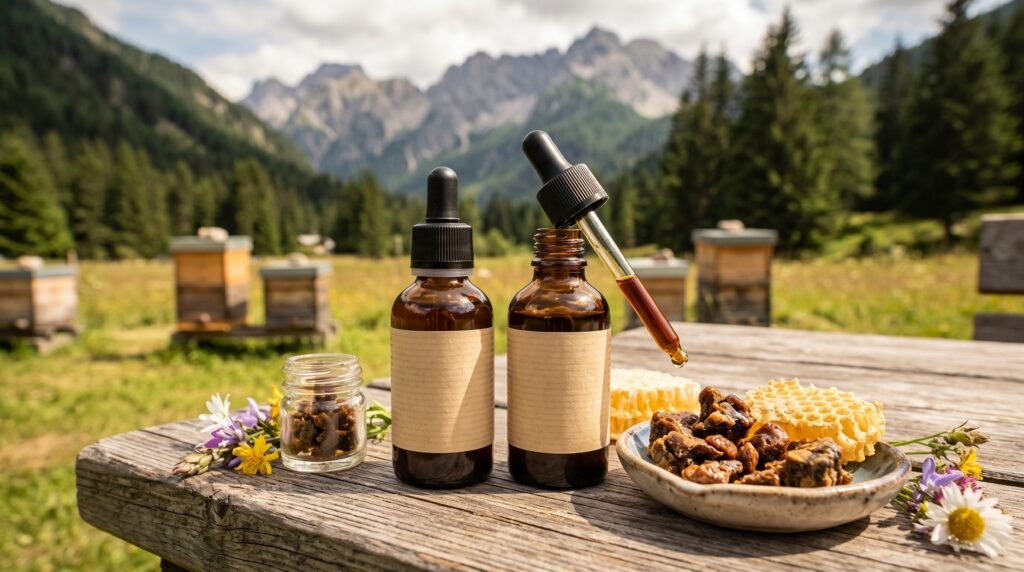
Propolis, in its raw form, is a sticky, waxy resin. It doesn’t dissolve easily in water, and it isn’t something you’d want to eat straight from the hive. That’s why, for generations, it has been prepared as a tincture: propolis extracted into a liquid, which makes it concentrated, easy to measure and easy to take.
Traditionally, that liquid is alcohol, which is the classic extraction method. Our alcohol-based tincture follows exactly that approach. Our alcohol-free version achieves the same goal using a non-alcoholic base.
A quick note on words. Strictly speaking, a tincture is an extract made with alcohol, while “extract” is a broader term that can use other bases. In everyday use, the two words are used almost interchangeably, which is why our category is called Propolis Extract / Tincture.
Both of our tinctures are made from certified organic Italian propolis, from Alpine apiaries.
Why Choose a Tincture?
Each format has its strengths, and the tincture’s are quite specific:
- It’s concentrated. A small 30ml bottle holds a lot of propolis, and you only use a few drops at a time.
- It’s flexible. You can take it straight from the dropper, stir it into a glass of water or juice, or mix it into a spoonful of honey, depending on what suits you.
- It slots into habits you already have. Morning glass of water, breakfast, a cup on your desk: the drops go wherever your routine already is.
- A bottle goes a long way. At around 20 drops a day, a 30ml bottle lasts roughly a month, though dropper sizes vary, so it’s worth checking on your own bottle.
- It’s easy to adjust to the household. One bottle on the kitchen counter, and everyone takes their own measure.
- It’s the traditional way. Tinctures are how propolis has been prepared for generations, long before it appeared on a shop shelf.
The Two Propolis Tinctures in Our Range
1. Organic Propolis Extract / Tincture (alcohol-based, 20% strength)
This is the classic. It contains organic propolis (20% dry extract), organic alcohol and water, and nothing else. It’s the traditional preparation, intended for adults’ daily routines.
Best for: adults who want the straightforward, classic propolis tincture. Contains alcohol: yes.
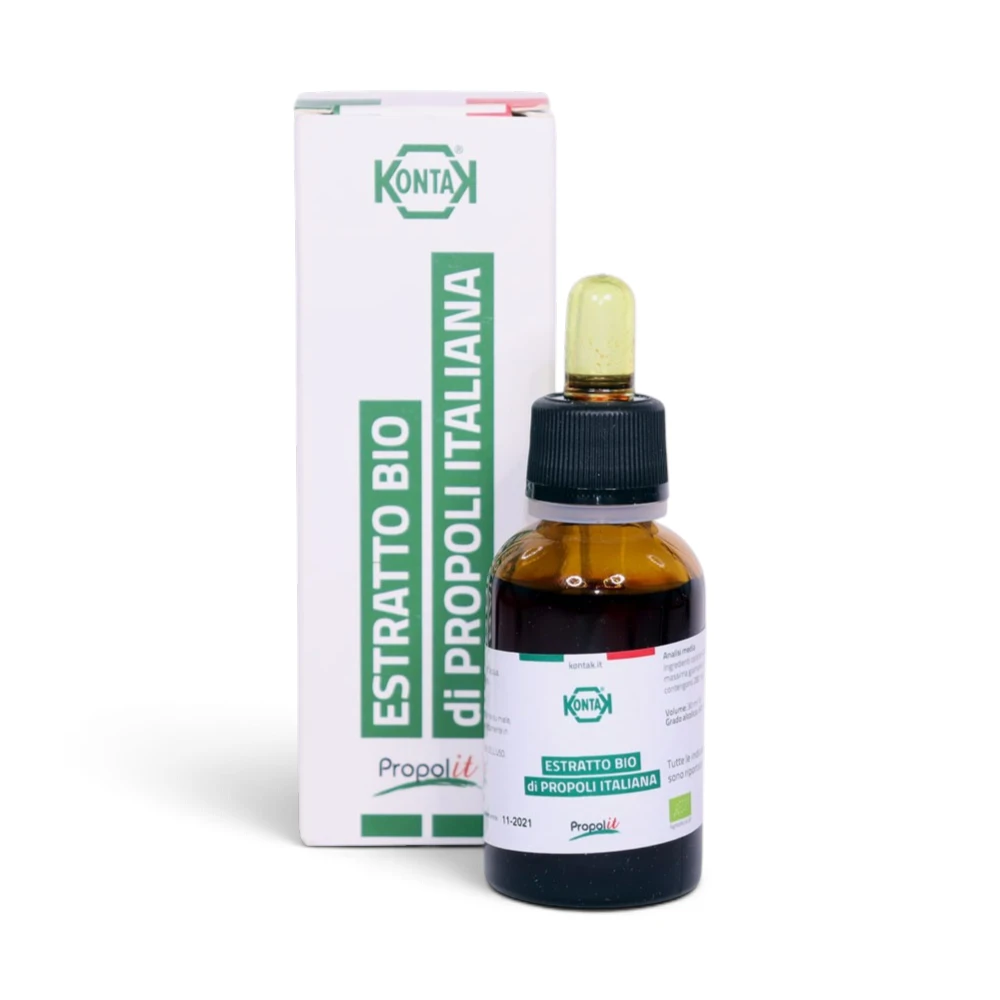
2. Alcohol-Free Organic Propolis Extract / Tincture (20% strength)
Same bottle size and the same 20% headline strength, but without the alcohol. It uses a non-alcoholic organic propolis extract in a naturally sweetened organic syrup base, with natural flavouring and citric acid. The result is a smoother, gentler taste, without the sharp bite of a traditional tincture. That makes it far more practical for children, and a good option for older family members or anyone who avoids alcohol.
Best for: children, older adults, and anyone avoiding alcohol. Contains alcohol: no.

What Does “20% Strength” Actually Mean?
Both of our tinctures have “20% strength” in their name, so it’s worth explaining what that figure is, and what it isn’t.
What it is. The percentage describes concentration: broadly, how much propolis is in the preparation compared with the liquid that carries it. A higher percentage means a more concentrated product. To give a sense of scale, in a traditional recipe for making a tincture at home, a 20% tincture means 200 g of propolis to every 800 g of alcohol, so about a fifth of the starting mixture is propolis.
What it isn’t:
- It isn’t calculated the same way by every producer. Some state how much raw propolis went into the recipe, others state how much dry extract is in the finished liquid. The label on our classic tincture lists the propolis as a 20% dry extract. These are different measurements, so two bottles that both say “20%” aren’t guaranteed to contain the same amount of propolis.
- It doesn’t translate across different bases. Laboratory comparisons of propolis extracts made with different solvents show that the percentage on its own doesn’t tell you what an extract contains. That’s one reason we don’t describe our alcohol-based and alcohol-free tinctures as identical, even though both say 20%.
- It doesn’t tell you what’s in the propolis itself. The specific compounds in any propolis depend on the trees it was collected from, which is why origin matters. Our guide to types of propolis explains more.
- It isn’t a promise about how it will work for you. “Strength” here means concentration, not a claim about effect, and we make no claims about effect.
What it means in practice. The number of drops suggested on each label already takes the concentration into account. Taking more than the label suggests doesn’t make a tincture work harder, so always follow the directions on the bottle.
Comparing with other brands. If you’re comparing tinctures, check what the percentage refers to (raw propolis used, or dry extract in the finished product) and what the liquid is made from. Without that, the numbers aren’t directly comparable.
Which Tincture Should You Choose?
A simple way to decide:
- Buying for a child? Choose the alcohol-free tincture. It’s the one formulated with children in mind.
- Avoiding alcohol for any reason (health, medication, personal or religious choice)? The alcohol-free version again.
- An adult who wants the classic, traditional preparation? The alcohol-based tincture is the straightforward choice.
- Sensitive to strong flavours? The alcohol-free version is noticeably smoother and sweeter.
- Sharing one bottle across a household that includes children? The alcohol-free tincture is the safer all-rounder, since everyone can use it.
How to Take a Propolis Tincture
The directions are straightforward, and they’re the same for both:
- Shake the bottle well before each use.
- Take around 20 drops a day.
- Choose how you’d like to take it:
- directly into the mouth (or onto the tongue)
- stirred into a small glass of water (or fruit juice, for the alcohol-free version)
- blended into a spoonful of honey
Both labels describe the tincture as suitable for daily use, with the colder months a popular time to build it into a routine. As always, check the label on the bottle in your hand, since that is the final word on directions.
Making It Part of Your Routine
A few things we’ve learned from customers over the years:
- Attach it to something you already do. Keep the bottle next to the kettle or the water jug, and take your drops with your morning glass. Routines stick when they don’t need remembering.
- Keep the dropper clean. Avoid touching it to your mouth, wipe it if needed, and keep the cap on between uses.
- Mind the stickiness. Propolis is a resin. A drop on a worktop or clothing can leave a sticky or brown mark, so wipe up spills promptly.
- Write the date you opened it on the bottle, and follow the storage advice on the label.
- Start small if you’re new to it. If you’ve never used propolis before, begin with a few drops before moving up to your usual amount.
- Seasonal habit. Many people build it into the autumn and winter routine, alongside a diffuser at home or a throat spray in the bag. Our guide to propolis in autumn and winter explains how the formats fit together.
Things Worth Knowing Before You Start
We’d rather you read this now than find out later:
- Alcohol. The classic tincture contains organic alcohol and is intended for adults. If you avoid alcohol for any reason, including health reasons, medication, or personal or religious choice, choose the alcohol-free version. If you take medication, ask a pharmacist whether alcohol is a concern for you.
- Honey and babies. If you mix your drops into honey, remember that honey should never be given to infants under 12 months old, because of the risk of infant botulism. This is standard NHS guidance. Our guide to propolis for the whole family goes into more detail.
- Allergies. Propolis can cause allergic reactions in some people, particularly those who are allergic to bee products, honey or certain pollens. If you’ve never used propolis before, start with a small amount. If you notice a rash, swelling of the lips or mouth, or any difficulty breathing, stop using it and seek medical help immediately.
- Pregnancy, breastfeeding and medication. If you’re pregnant, breastfeeding, taking regular medication, or have a medical condition, speak to your GP or pharmacist before using any propolis product.
- If you’re feeling unwell. A propolis tincture is not a medicine. If you have symptoms that last more than a few days, keep coming back, or worry you, please see your GP rather than relying on a wellness product.
Tincture, Spray or Syrup?
If you’re deciding between formats, the tincture is the most flexible, since you control how and when you take it. The spray is the quickest and most portable, best for moments during the day: our propolis throat spray guide compares the three we stock. A syrup is the simplest everyday habit, though ours is currently being reformulated. Our guide to propolis formats explained compares all of them side by side.
Frequently Asked Questions
How many drops of propolis tincture should I take a day?
Both of our tinctures suggest around 20 drops a day. Always follow the directions on the label of the bottle you have.
How long does a 30ml bottle of propolis tincture last?
At around 20 drops a day, roughly a month, though it depends on the size of the drops from your dropper.
What is the difference between a propolis tincture and a propolis extract?
A tincture is an extract made with alcohol. “Extract” is the broader term, which can also include non-alcoholic versions, like our alcohol-free product. In everyday use, the two words are often used interchangeably.
Is the alcohol-free tincture as strong as the alcohol-based one?
Both are labelled 20% strength, but they are made with different extraction methods and bases, so we wouldn’t describe them as identical. Choose according to who will be taking it and whether alcohol is suitable, and follow the label.
Can children take propolis tincture?
Our alcohol-free tincture is the one made for children, as well as older adults and anyone avoiding alcohol. The classic tincture contains alcohol and is intended for adults. Always check the label, and remember that honey, if you mix it in, isn’t suitable for infants under 12 months.
Can I take propolis tincture every day?
Both labels describe it as suitable for daily use. Follow the suggested amount, and speak to your GP or pharmacist if you have any health conditions or take medication.
What does propolis tincture taste like?
Our alcohol-free tincture is described as smooth and gentle, without the sharp bite of a traditional tincture. The classic alcohol-based one has the stronger, more resinous character that tinctures are known for, which is why many people stir it into water or honey.
Is your propolis tincture organic?
Yes. Both are made from certified organic ingredients. You can read more about what that means in our guide to what a propolis organic certificate actually means.
Can I take propolis tincture if I’m allergic to bees?
Be cautious. Propolis can trigger reactions in people who are allergic to bee products. If you have a known allergy to bees, honey or bee products, speak to your GP or pharmacist before using any propolis product.
Find the Right Tincture for You
Visit our shop to explore our full range of propolis tinctures, including the alcohol-free option for the whole family.
For more on propolis itself, see our complete guide: What Is Propolis?, or browse the rest of our blog for more insights and everyday uses.
This article is general information about our propolis tinctures and is not medical advice. Propolis products are not medicines and are not intended to diagnose, treat, cure or prevent any illness. Always read the label and follow the directions on the product you purchase. If you are unwell, pregnant, breastfeeding, taking medication or have an allergy to bee products or honey, consult a GP or pharmacist before use.
