
Propolis Family Care: A Guide for Parents & Children
If you’ve been using propolis yourself and wondered whether your children could too, you’re asking a reasonable question — and one we’re asked often.
The short answer is that several products in our range are formulated specifically with children in mind, while others genuinely aren’t. The difference isn’t marketing; it comes down to alcohol content, how the product is taken, and a few practical considerations that are worth understanding before you buy.
This blog walks through what’s suitable, what isn’t, and what to check before bringing any propolis product into a family home.
Start Here: Always Read the Label
Before anything else, the single most important rule: the product’s own label and packaging are the authority, not this article. Directions, dosage and suitability vary between products, and manufacturers update them. Whatever you read here, check the actual bottle or box in your hand.
If your child has a medical condition, takes regular medication, or has a known allergy — particularly to bee products or honey — speak to your GP or pharmacist first. Propolis is a natural substance, but “natural” and “suitable for everyone” aren’t the same thing.
The Alcohol Question
This is the main dividing line across our oral range.
Traditional propolis tinctures and throat sprays are made with an organic alcohol base. It’s the classic method, and it’s how propolis has been extracted for generations, but it also gives those formulations a sharp taste and makes them intended for adults and teenagers rather than younger children.
For that reason, we stock alcohol-free versions of both:
Alcohol-Free Propolis Tincture (30ml, 20% strength)
Same concentrated 20% propolis extract as the classic tincture, but built on a naturally sweetened organic syrup base rather than alcohol. The result is a noticeably smoother, gentler taste without the sharp bite — which, practically speaking, is the difference between a child taking it willingly and a daily argument.
How it’s taken: shake well, then 20 drops daily — directly onto the tongue, stirred into water or fruit juice, or mixed into a spoonful of honey.

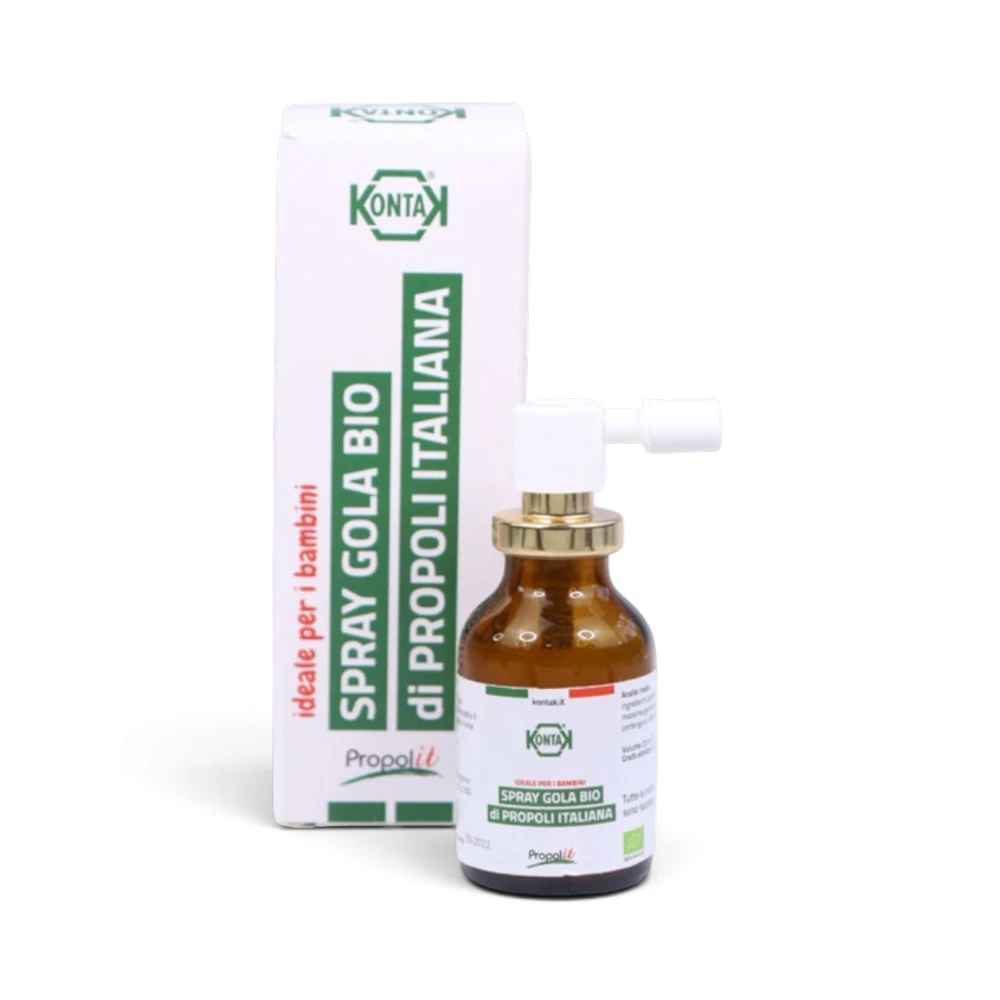
Alcohol-Free Propolis Throat Spray (20ml)
A mild, child-friendly spray combining organic propolis with honey and Vitamin C (organic ascorbic acid). The spray nozzle delivers it precisely towards the back of the throat, which makes it quick and practical for moments during the day rather than a sit-down routine.
How it’s used: 1 or 2 sprays towards the back of the throat as needed, day or night. Do not exceed 8 sprays in any 24-hour period.
Both are made entirely from certified organic ingredients, free from synthetic additives and preservatives.
A Note on Honey and Babies Under 12 Months
This one isn’t about propolis specifically, but it matters and it’s easily overlooked.
Honey should never be given to infants under 12 months old. This is standard NHS and international paediatric guidance: honey can contain bacterial spores that a baby’s immature digestive system can’t handle, which can cause infant botulism. After a child’s first birthday, this risk no longer applies.
This applies directly to our alcohol-free throat spray, described above — as well as our propolis syrup and several other products across the range, all of which contain honey. If there’s a baby in the house, check the ingredients list on any product before use, and hold off on anything honey-based until after their first birthday.
Diffusers for Children’s Rooms: The Propolina Range
This is where things get genuinely well-suited to family homes. Our Propolina series was designed specifically for nurseries, children’s bedrooms and playrooms — bee-shaped diffusers with antennae that glow softly in the dark, doubling as a gentle night light at bedtime.
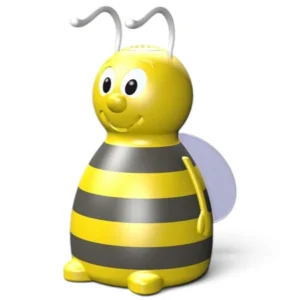
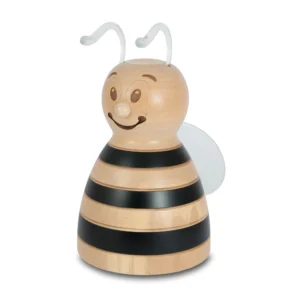
Choosing between plastic and wood: the plastic models (P1, P2) are built for everyday practicality — durable and easy to wipe clean, which matters more than you’d think in a child’s room. The wooden models (P3, P4) are made from Italian wood finished with non-toxic, water-based paints, and suit households that prefer natural materials and a warmer look.
Choosing whether you want the ioniser: P1 and P3 come without one, P2 and P4 include it. For rooms with very young children, it’s worth knowing that the ioniser is the feature manufacturers flag guidance around — on our Propol Therapy A4, for instance, the manufacturer specifies that switching the ioniser off allows use in rooms with children under three. If you’d rather simply not have the feature at all, P1 or P3 answer that directly.
All four arrive with one organic propolis capsule (lasting up to 122 hours — roughly 15 days at 8 hours per day), a power adapter, and a 2-year extended warranty.
Capsules: What Parents Need to Know
Three things worth being clear about:
1. Capsules are for diffusing, never for swallowing. This bears repeating in a family context, because the word “capsule” naturally suggests something taken orally. Diffuser capsules are designed exclusively to be warmed inside a diffuser. Keep them well out of reach of children, exactly as you would any small household item that isn’t food.
2. Essential oil blends are for room diffusion only. Our Breath, Repell, Purify and Relax capsules contain essential oils and are formulated for diffusing into a room — not for direct inhalation through the Propol Therapy A4’s masks. Only our 100% Pure Propolis and Propolis + Boswellia capsules are suitable for mask inhalation. If you bought the A4 partly for its paediatric mask, this distinction matters.
3. All six blends work in every Propolina model. Whichever diffuser you choose, the full capsule range fits it. For a child’s bedroom, the 100% Pure Organic Propolis capsules or Relax (lavender, arolla pine, orange) tend to suit bedtime best.
The Paediatric Mask (Propol Therapy A4)
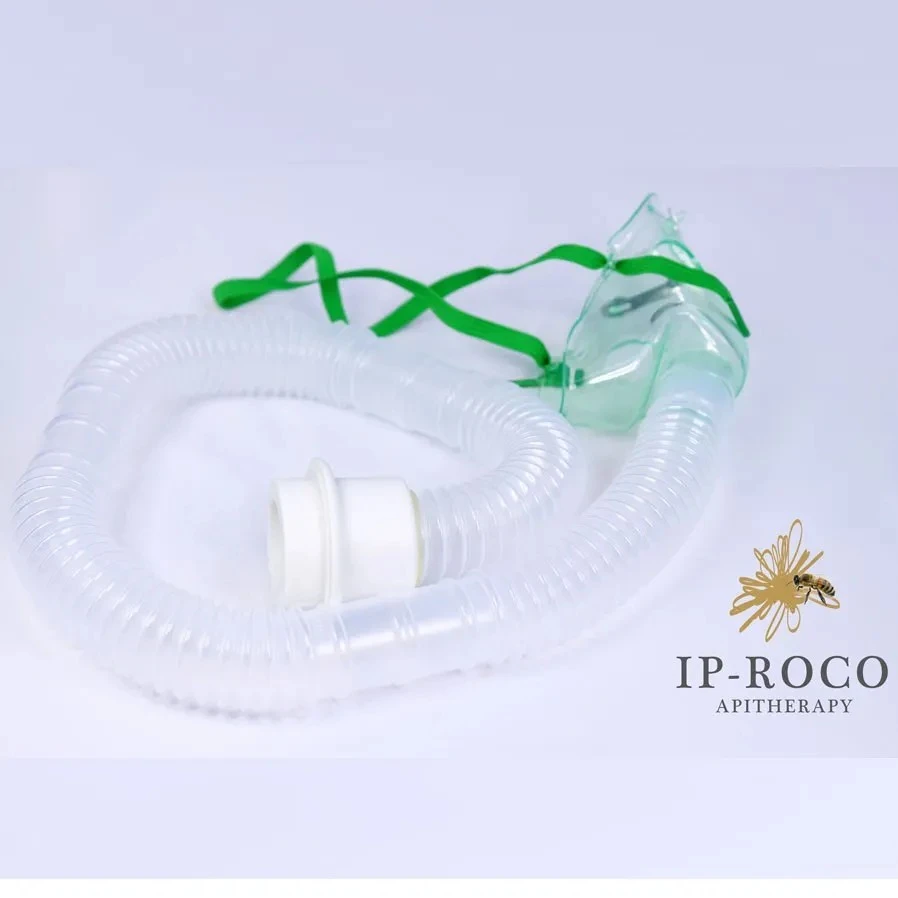
If you have the Propol Therapy A4, it arrives with both an adult and a child-sized inhalation mask, plus breathing tubes. The child mask isn’t a scaled-down afterthought — it’s properly sized for a comfortable fit, which matters considerably when you’re asking a small child to sit still with something on their face.
The manufacturer’s guidance is to start with short sessions of five to ten minutes, building up gradually and never exceeding an hour at a time. With children, we’d suggest starting at the shorter end and letting them get used to the sensation first. A mask is a strange experience for a young child, and rushing it rarely goes well.
Replacement child masks are available separately.
A Realistic Summary
- Adults and teenagers: the full range is open to you, including the classic alcohol-based tincture and sprays.
- Children: the alcohol-free tincture and alcohol-free throat spray are the two oral products made with them in mind.
- Babies under 12 months: no honey-containing products, full stop. Check ingredients.
- Nurseries and children’s bedrooms: the Propolina range, with P1 and P3 as the ioniser-free options.
- Anyone using the A4’s mask: only pure propolis or Propolis + Boswellia capsules — never the essential oil blends.
- All capsules: kept out of reach, always.
One Last Thing
Propolis products aren’t medicines. They’re not intended to diagnose, treat, cure or prevent any illness, in children or adults. If your child is unwell, that’s a conversation for your GP — not something to manage with a wellbeing product.
What propolis can be is a small, pleasant part of a family’s everyday routine, the same way it’s been used in households for generations. Used sensibly, with the right format for the right age, it’s a genuinely simple thing to bring into the home.
Visit our shop to explore our full range, including our alcohol-free tinctures and sprays and the complete Propolina children’s collection.
For more on propolis itself, see our complete guide: What Is Propolis?, or browse the rest of our blog for more insights and everyday uses.
This article is general information about product suitability and is not medical advice. Propolis products are not intended to diagnose, treat, cure or prevent any illness. Always read the label and follow the directions on the product you purchase. If your child has a health condition, takes medication, or may have an allergy to bee products or honey, consult a GP or pharmacist before use.
